Is Quinoa a Carb? Carbs, Glycemic Index, and Blood Sugar
Yes, quinoa is a carbohydrate — but a high-protein, high-fiber one with a low glycemic index. Here's what that means for blood sugar, diabetes, and low-carb diets.
Yes — quinoa is a carbohydrate. About 70% of its calories come from carbs, which makes it a starchy food in the same broad category as rice, oats, and potatoes. But stopping there misses the point. Quinoa is a particular kind of carbohydrate: high in protein and fiber, low on the glycemic index, and slow to digest. That combination is why it behaves very differently in the body from a food like white bread, even though both are “carbs.”
This article breaks down exactly how many carbs quinoa has, what its glycemic index means for blood sugar, and whether it fits diabetic and low-carb eating. For technique, see our guide to cooking quinoa; for the full nutrient profile, see our quinoa overview.
How Many Carbs Are in Quinoa?
Here is the carbohydrate breakdown for one cup of cooked quinoa (about 185 grams):
- Total carbohydrates: 39 g
- Dietary fiber: 5 g
- Net carbs: 34 g
- Protein: 8 g
- Sugars: under 2 g (naturally occurring)
- Calories: 222
So a cup of cooked quinoa delivers 39 grams of total carbohydrate. Because 5 of those grams are fiber — which your body does not digest into blood sugar — the net carbs come to around 34 grams. The near-total absence of sugar is worth noting: quinoa’s carbs are almost entirely complex starch, not the simple sugars that spike blood glucose.
For comparison, that 39 g sits between a cup of cooked white rice (about 45 g, with far less fiber) and a cup of cooked oatmeal (about 28 g). Quinoa’s edge is not fewer carbs — it is the protein and fiber riding alongside them.
Complex vs Simple Carbohydrates
Not all carbs act the same way, and this is the key to understanding quinoa.
Simple carbohydrates — the sugars in soda, candy, and white bread — are digested fast and hit the bloodstream quickly, producing a sharp rise and fall in blood sugar.
Complex carbohydrates — the starches and fiber in quinoa, legumes, and whole grains — are built from longer molecular chains that take longer to break down. They release glucose gradually, giving you steadier energy and better satiety.
Quinoa is almost entirely complex carbohydrate. Add its 8 grams of complete protein and 5 grams of fiber per cup, and you have a food that digests slowly and keeps you full — the opposite of a blood-sugar spike. Our page on fiber in ancient grains explains why that fiber matters so much.
Quinoa’s Glycemic Index and Glycemic Load
The glycemic index (GI) ranks how quickly a food raises blood sugar on a scale of 0 to 100. Quinoa’s GI is around 53, which lands it firmly in the low category (55 or below).
For context:
| Food | Glycemic index |
|---|---|
| Quinoa | ~53 (low) |
| Brown rice | ~68 (medium) |
| White rice | ~73 (high) |
| White bread | ~75 (high) |
Glycemic load (GL) goes one step further by accounting for portion size. A typical serving of quinoa has a glycemic load of about 13, which is moderate. Both numbers tell the same story: quinoa raises blood sugar gently and gradually rather than sharply — a direct result of its fiber and protein slowing digestion.
Can Diabetics Eat Quinoa?
For most people managing diabetes, quinoa is one of the better grain choices — and often a smart swap for white rice. Its low glycemic index, high fiber, and complete protein all support steadier blood sugar. Several factors work in its favor:
- The fiber slows glucose absorption.
- The protein blunts the post-meal blood-sugar rise.
- The magnesium content (30% of the daily value per cup) is relevant because magnesium plays a role in insulin sensitivity.
That said, quinoa is still a carbohydrate, and portion control still matters. A cup of cooked quinoa contains 34 net carbs — enough to affect blood sugar if eaten in large amounts. Practical tips:
- Keep portions to about half a cup to one cup cooked.
- Pair quinoa with non-starchy vegetables and a protein source to further flatten the glucose curve.
- Choose savory preparations over sweetened ones.
This is general information, not medical advice. If you have diabetes or prediabetes, work with your doctor or a registered dietitian to fit quinoa into your personal carbohydrate targets. See our special diets guide for how ancient grains fit various eating plans.
Does Quinoa Fit a Low-Carb or Keto Diet?
This is where quinoa’s carb content becomes a genuine limitation. At 34 net carbs per cooked cup, quinoa does not fit a strict ketogenic diet, which typically caps total carbs at 20 to 50 grams for the entire day. A single serving would use most or all of that allowance.
For moderate low-carb diets (100 to 150 g of carbs per day), quinoa can fit in smaller portions — a quarter to half cup — especially given how filling its protein and fiber make it. But if you are doing keto specifically, quinoa is not the grain for you.
It is worth being clear about this because quinoa’s “health food” reputation sometimes leads people to assume it is low-carb. It is not. It is a nutritious carb, which is a different thing.
Is Quinoa a Carb or a Protein?
Both — but it is primarily a carbohydrate. People get confused because quinoa is famous for being high in protein “for a grain,” and because it is technically a seed rather than a true cereal grain. Nutritionally, though, carbohydrates supply the majority of its calories (about 70%), with protein around 15% and fat around 15%. It is best thought of as a high-protein complex carbohydrate, not a protein food like meat or eggs.
The Bottom Line
Quinoa is unambiguously a carbohydrate, but one of the better ones you can eat. Its carbs are complex, fiber-rich, and paired with complete protein, giving it a low glycemic index and a gentle effect on blood sugar. That makes it a strong choice for general health and a reasonable option for many people managing blood sugar — but it is not a low-carb or keto food, and portions still count.
For more on how quinoa stacks up against other staples, read our quinoa vs rice comparison, or explore the full nutrition of ancient grains.
Frequently Asked Questions
Is quinoa a good carb or a bad carb? A good one. Its carbohydrates are complex, high in fiber, low in sugar, and low on the glycemic index — the profile associated with steady energy and better blood-sugar control.
How many net carbs are in quinoa? About 34 net carbs per cup cooked (39 g total carbs minus 5 g fiber).
Does quinoa spike blood sugar? Not sharply. Its low glycemic index (~53), fiber, and protein produce a gradual rise rather than a spike, especially in normal portions.
Is quinoa keto-friendly? No. At 34 net carbs per cup, quinoa does not fit a strict ketogenic diet, though small portions may fit moderate low-carb plans.
Which quinoa is best for blood sugar? All colors — white, red, and black — have a similar carbohydrate and glycemic profile. Choose based on taste and texture rather than blood-sugar impact.
Last updated August 10, 2026
Related reading
Quinoa vs Rice: Nutrition, Calories, and Which Is Healthier
A head-to-head comparison of quinoa and rice — protein, fiber, calories, glycemic index, and how to swap one for the other in real meals.
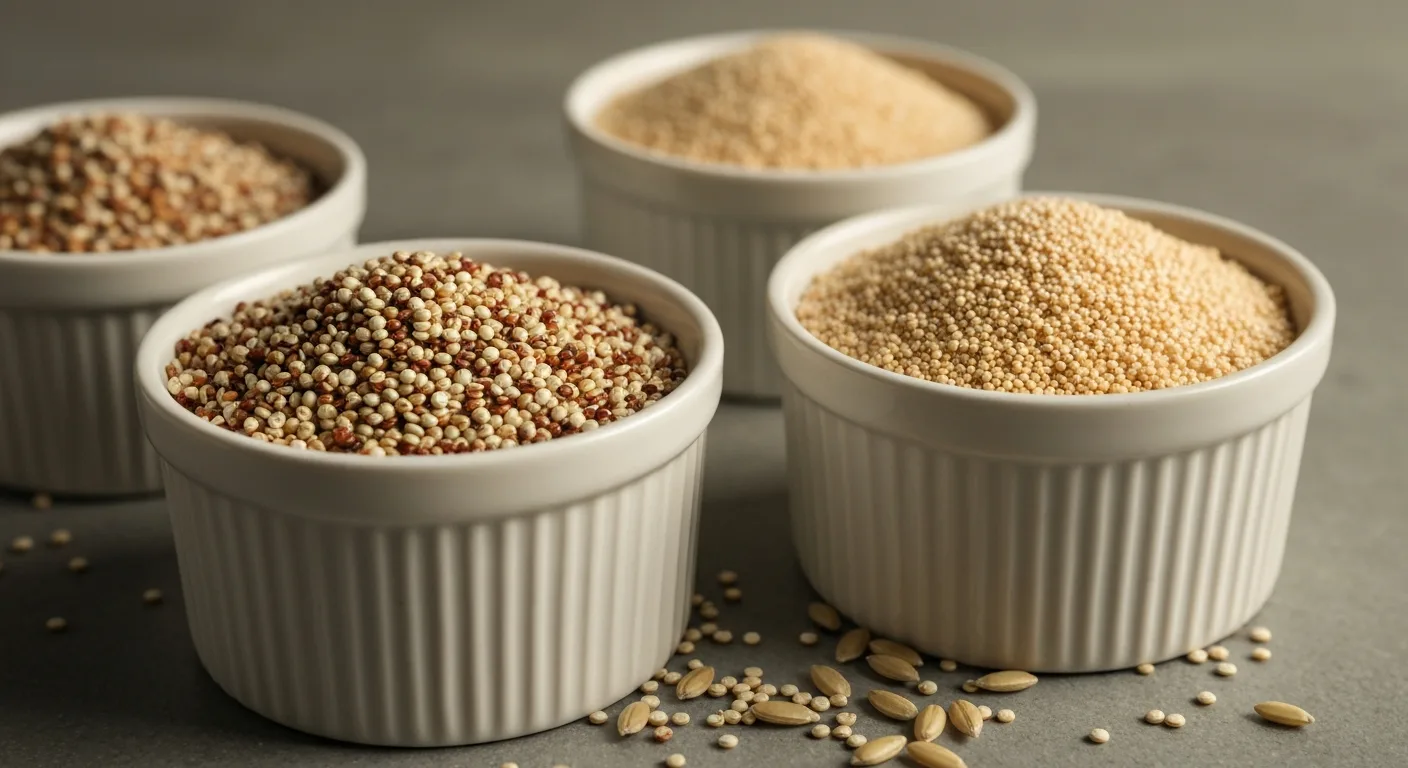
Ancient Grains Protein: Complete Guide to High-Protein Heritage Grains
Which ancient grains have the most protein? Compare protein content, amino acid profiles, and learn how to build complete proteins with grains.
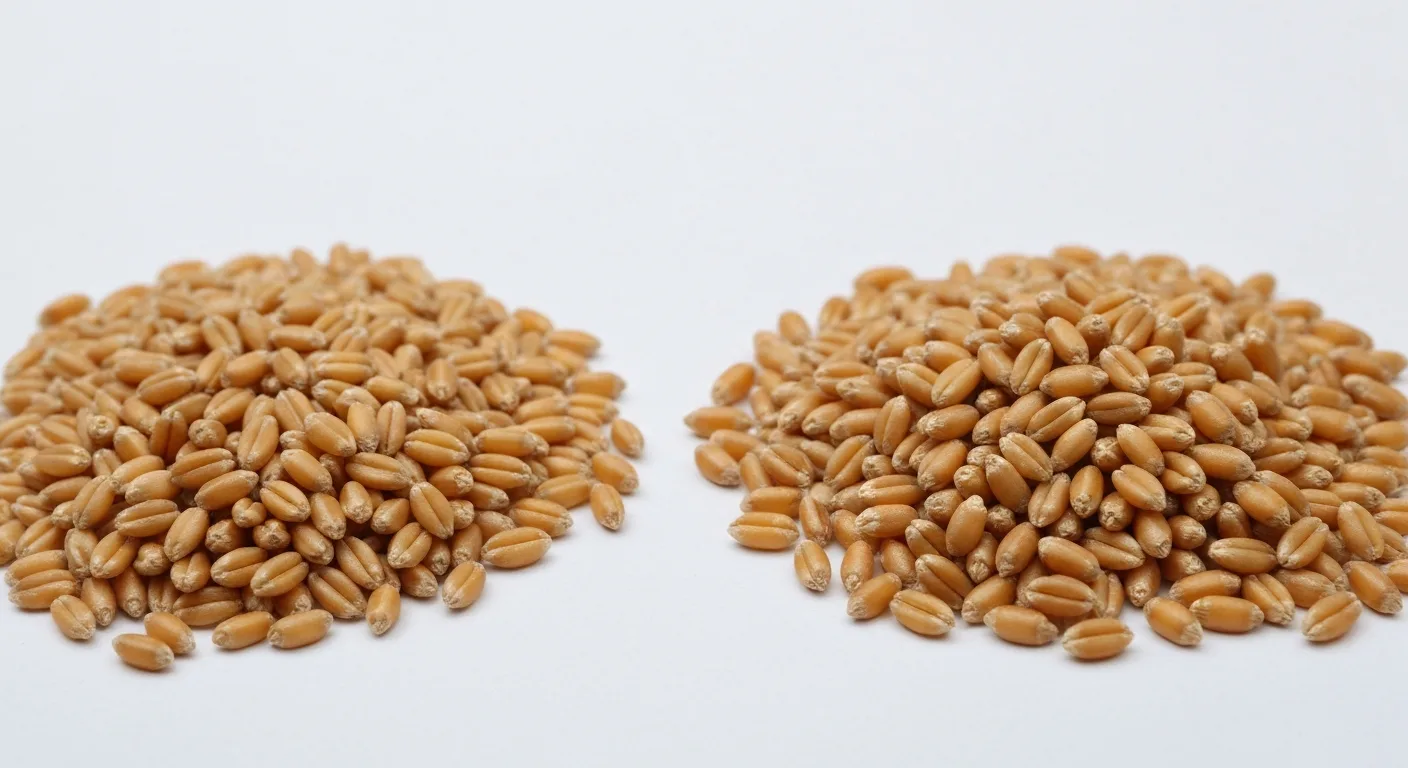
Einkorn vs Modern Wheat: The Original Wheat Compared
Einkorn is the oldest cultivated wheat. Discover how this ancient grain compares to modern bread wheat on nutrition, gluten, taste, and more.
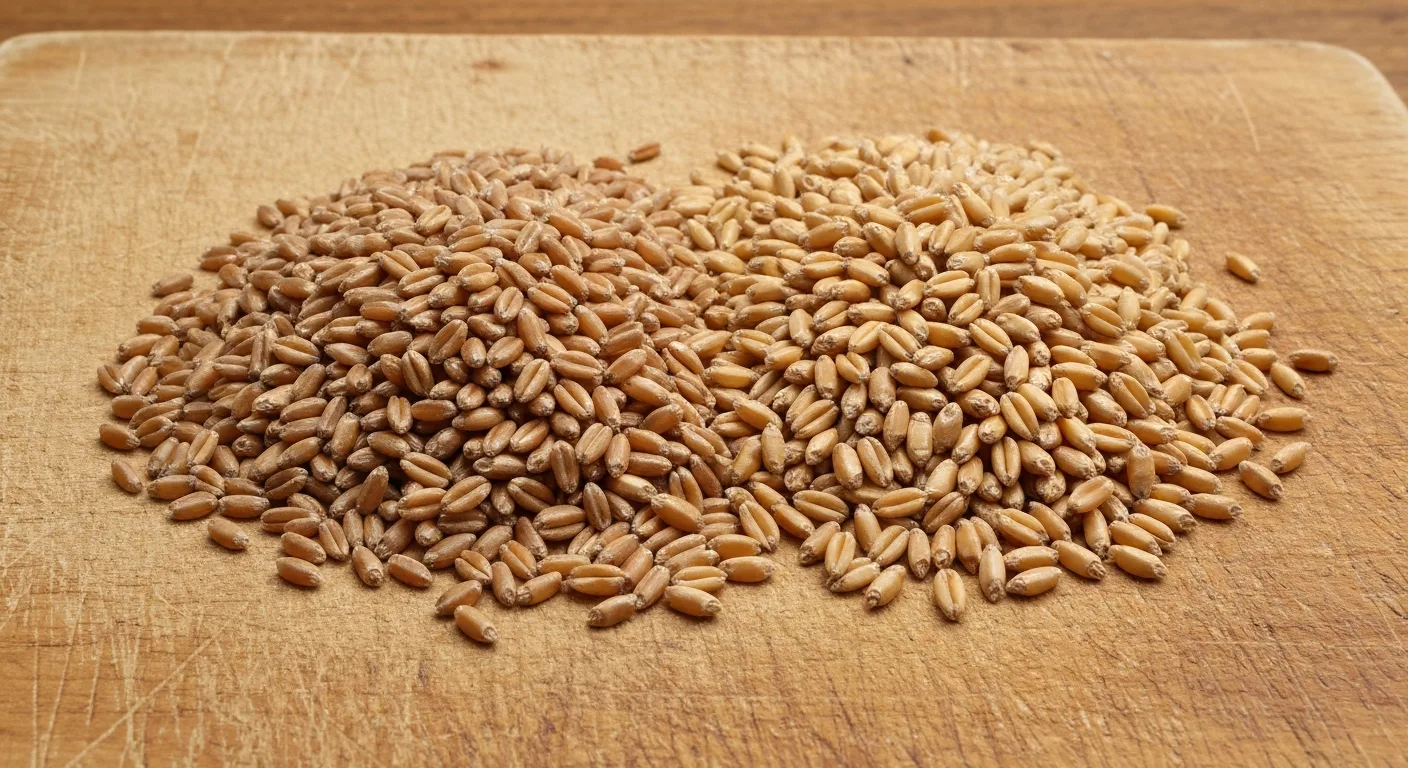
Spelt vs Wheat: Nutrition, Taste, and Baking Differences
How does spelt compare to modern wheat? We break down the nutritional, culinary, and agricultural differences between these two grains.